Shared business number

One number.
Whoever is free
answers.

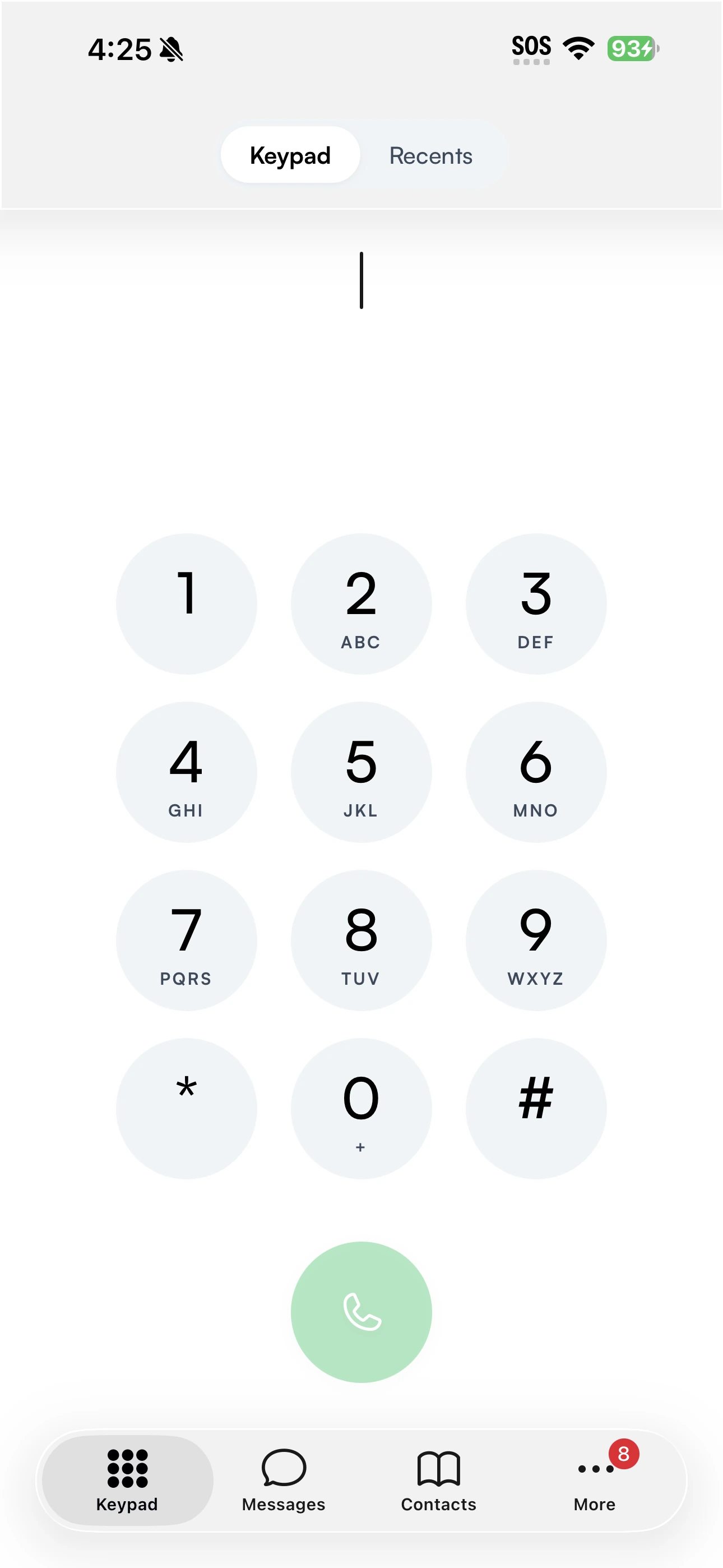
Several people, one business number. It rings every signed-in device at once, everyone can text from it, and the customer only ever sees the business.

See the app they use
01

Everyone rings at once

First to answer takes it, the rest stop

02

Everyone can text

Shared threads, not one person's inbox

03

Nobody's mobile shows

Outbound calls and texts carry the business number

01 / What sharing usually means

Right now “shared” means forwarded.

One person’s mobile is the business number. When they cannot get to it, it forwards to a second person, who then calls the customer back from their own phone. Now the customer has two numbers for you, and only one of them is yours.

The texts are worse. They arrive on one handset, they are answered from one handset, and nobody else can see what was agreed.

A number is not shared because it is diverted. It is shared when more than one person can pick it up and everyone can see what was said.

02 / How it actually rings

Everybody at once, then nobody.

A call to the business number rings every signed-in device at the same moment. The first person to answer takes it and every other device stops ringing straight away. No queue to sit in, no hunt list to maintain, no decision about whose turn it is.

A device only rings while that person is signed in and still on your team, and that is worked out fresh on every single call rather than from a list someone has to remember to update.

A call nobody reached still lands in front of the whole team afterwards, with the number and the time, instead of sitting in one person’s missed-call list.

03 / What the customer sees

The business. Every time.

This is the part staff ask about first, so it is worth saying plainly: nothing your team sends goes out under their personal number. Customers see the business, reply to the business, and never end up with a staff member’s mobile in their contacts.

It works in the other direction too. When someone leaves, the customers they spoke to are still your customers, and the thread is still here.

The history is the business’s. Calls, messages and photos stay on the customer’s record, where whoever serves them next can read them.

How many, and how much

Two included

Two devices come with the $79 monthly charge.

Five in total

$29 a month for each device after the first two.

Their own phones

A device is any phone or tablet signed in. No company handsets.

Off in one switch

Remove someone from the team and the next call skips them.

If you are at five devices and need to add someone, remove a device first. Full pricing

Straight answers

What people ask before they switch.

Can more than one person answer the same number?
Yes. That is the whole design. An incoming call rings every signed-in device simultaneously, and whoever answers first gets the call while everyone else stops ringing.
Do they all use the same number, or does each person get their own?
The same number. Everyone works on the business number: they answer it, and when they call or text out, the customer sees the business number, not the staff member's mobile.
Can everyone text from it?
Yes. Two-way SMS and two-way MMS run on the same number. Message threads are shared, so anyone with access can pick up a conversation another person started.
What does the customer see?
One number, every time. They do not see who answered, they do not get a different number when a different person replies, and they never end up with a staff member's personal mobile saved in their phone.
What happens when one person answers?
The other devices stop ringing immediately. The call belongs to whoever picked up, and afterwards it appears in the shared call history so the rest of the team can see it happened.
Can staff use their own mobile devices?
Yes, and most do. Seglo Phone is an app they sign in to on their existing phone or tablet. Their personal number stays private and is never shown to your customers.
What happens when someone leaves?
Take them off the team and the very next call skips their device. There is no password to change and no handset to collect. The calls, messages and photos stay with the business, on the customer's record.
What if we have more than one shop?
Each location can have its own number, and they all arrive in the same app. One person can answer more than one location without carrying more than one phone, and each person chooses which of your numbers rings their own device. Additional numbers carry their own monthly charge.
How many people can share the number?
Up to five devices. Two are included in the $79 monthly charge and each one after that is $29 a month. One person using both a phone and a tablet uses two of the five.

Stop forwarding the business to someone's mobile.

What it costs. $149 once to set up, then $79 a month including two devices. Each device after that is $29 a month, up to five. Prices exclude GST, which is shown as its own line on the invoice. Month to month, exit cost nothing, so the least you can spend is $228.

Emergency calls (000, 112, 106). 000 and 112 work from Seglo Phone, and they need power and a working internet connection. In an outage, use a mobile or a fixed line. Emergency services see the service address you have registered, not where the person calling is standing. Always keep another way to reach emergency services. 106 is handled separately and is not carried as a voice call by the app.

Conversation, not campaigns. Your number is for talking to your own customers. Bulk marketing goes out on the platform messaging channel instead, and a number that starts behaving like a broadcast is throttled. That is what keeps it deliverable.